
Social Media
Ordinances Though Promulgated under Compelling Circumstance Make Parliament Appear Redundant
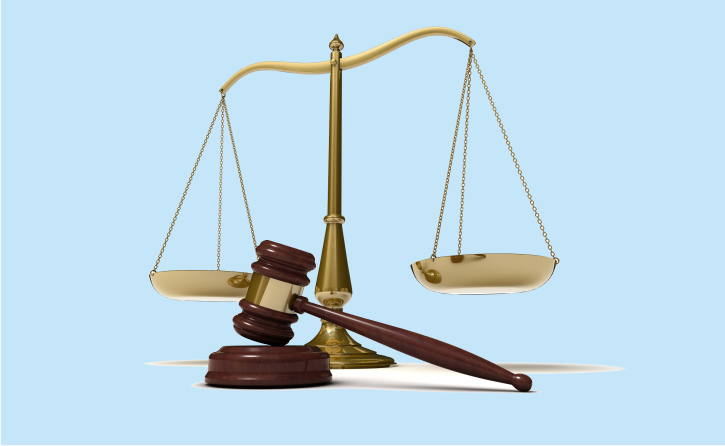
President Pranab Mukherjee has recently given assent to Payment of Wages (Amendment) Ordinance, 2016 and Specified Bank Notes (Cessation of Liabilities) Ordinance, 2016. These are the latest ordinances of the Modi government which immediately after taking charge in May 2014 began its innings with recommendations for two ordinances at the very first Cabinet meeting.
Article 123 in the Constitution of India 1949 lays down Power of President to promulgate Ordinances during recess of Parliament as under:
- If at any time, except when both Houses of Parliament are in session, the President is satisfied that circumstances exist which render it necessary for him to take immediate action, he may promulgate such Ordinance as the circumstances appear to him to require.
- An Ordinance promulgated under this article shall have the same force and effect as an Act of Parliament, but every such Ordinance:
- shall be laid before both House of Parliament and shall cease to operate at the expiration of six weeks from the reassemble of Parliament, or, if before the expiration of that period resolutions disapproving it are passed by both Houses, upon the passing of the second of those resolutions; and
- may be withdrawn at any time by the President Explanation where the Houses of Parliament are summoned to reassemble on different dates, the period of six weeks shall be reckoned from the later of those dates for the purposes of this clause.
- If and so far as an Ordinance under this article makes any provision which Parliament would not under this Constitution be competent to enact, it shall be void CHAPTER IV THE UNION JUDICIARY
President has promulgated 679 Ordinances after the Constitution came into force in 1950 till December 2014. During the five-year period of the UPA-II headed by former Prime Minister Manmohan Singh 25 ordinances were promulgated and Modi government has almost touched the same number during the period from May 2014 to December 2016. These decisions imply that the President, acting on the advice of the Council of Ministers, may promulgate ordinances at any time for any reason. More importantly, such ordinances can produce permanent changes in the law even if they fail. Article 123, as a result, has morphed into a second Parliament, and more importantly, renders India’s normal Parliament nearly redundant. Compared to the cumbersome method of making laws through Parliament, ordinances are easier and quicker; they require neither debates nor votes. Article 123 is a handy legislative tool for the President, and has been abused more than it has been properly used.
President Pranab Mukherjee while responding to questions during an address to Central Varsities and Research Institutions in New Delhi on January 2016 had remarked that, the “Ordinance route cannot be taken, should not be taken for normal legislation”.
Supreme Court and High Courts and Constitutional functionaries have routinely deprecated the tendency of governments to take the ordinance route for mere political expediency. The temptation to use the power vested in the President and the Governors under Articles 123 and 213 of the Constitution is generally a result of one of the following three reasons:
- Reluctance to face the legislature on particular issues,
- Fear of defeat in the Upper House where the government may lack the required numbers, and
- The need to overcome an impasse in the legislature caused by repeated and wilful disruption by a vociferous section of the Opposition
There is no denying the contention that ordinances should be issued only to meet certain exigencies and under compelling circumstances, it is equally important to understand that disruptions in parliamentary play a significant role. A dysfunctional House sometimes constitutes a compelling circumstance in itself. Generally, it is the combination of ‘Opposition’ obstructionism and ‘Government’ adamancy that derails the legislation and leads to ordinances. It is as such expected of the elected members and political parties to observe constitutional propriety and have healthy debates and votes in the national interest and help follow the legislative route to enact laws.
Related Articles
-
 Apr 07, 2018 17:00 pm



Related Articles
-
Created at: Jan 22, 2020
-

Created at: Nov 2, 2019
-

Created at: May 28, 2019
-

Created at: May 27, 2019
-

Created at: May 26, 2019
-

Created at: May 24, 2019
-

Created at: May 24, 2019