
Social Media
Nobel Prize in Economics on Irrational Human Traits
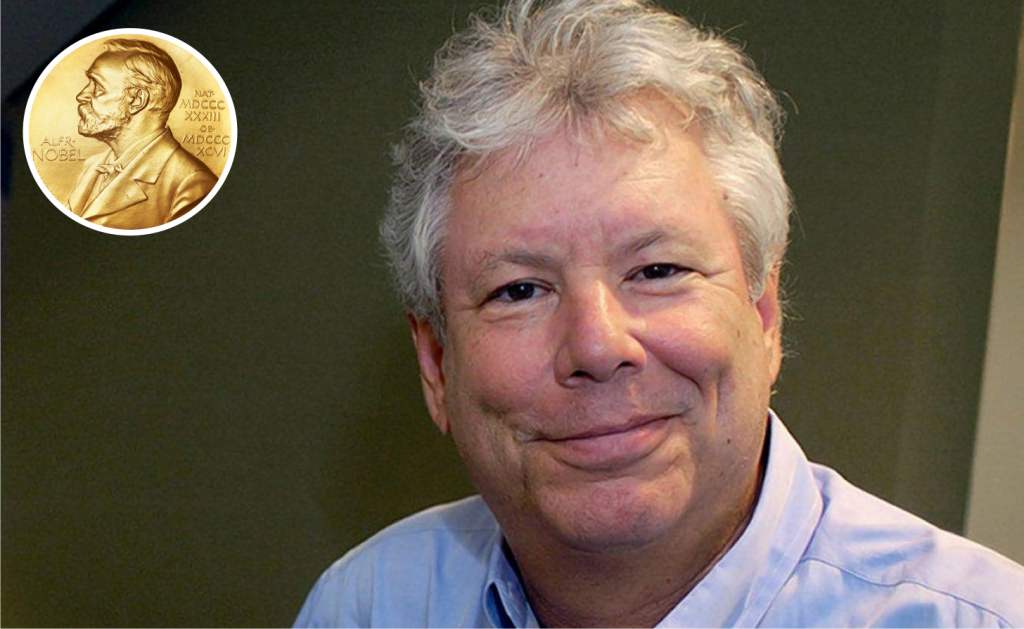
Nobel Memorial Prize in Economics for 2017, the Sveriges Riksbank Prize in Economic Sciences in Memory of Alfred Nobel, has been won on Monday October 9, 2017 by Richard H. Thaler, born in 1945 in East Orange, New Jersey, USA, aged 72, a professor of Economics and Behavioural Science at the University of Chicago’s Business School, for “his contributions to behavioural economics”, upending the longstanding notion that individuals make rational decisions about their futures and finances and helping to develop policies intended to nudge people toward altering their choices.
- Richard Thaler has challenged the standard economic assumption that people act in their best interests. He has challenged this assumption systematically, detailing how cognitive biases predictably lead consumers to poor decisions.
- Thaler has used his insights to propose ways to help people save and save more for the retirement. He has helped to advance automatic enrolment in retirement-savings plans and automatic increases in contributions to these plans, a major shift in how Americans save money.
- He also influenced public policy on smoking, organ donations.
- Thaler said a takeaway from his research is ‘economic agents are humans and that economic models have to incorporate that’.
- Richard H. Thaler won the Nobel Prize in economics for his research on how human traits affect individual decisions as well as financial markets.
- He used psychological insights to explain why markets aren’t always efficient.
Thaler’s work has been particularly influential in finance, helping explain why markets may often over-react to dramatic news. Along with another recent Nobel laureate, Robert Shiller, Thaler has been one of the pioneers in the area of behavioural finance, helping us understand market phenomena that conventional economics could not explain well.
Richard Thaler got a Nobel Prize for saying that stupid things can happen in financial markets and he explained that, how people think about financial markets, helping found the field of behavioural finance. Today, billions of dollars are staked by fund managers who use his insights to try to profit from the biases he helped expose—and yet irrationality still hasn’t been arbitraged away.
Richard Thaler had described in a tweet on November 8, 2016 about India’s demonetisation as, “This is a policy I have long supported. First step toward cashless and good start on reducing corruption” but also remarked “damn” when it was brought to his notice that the government was introducing Rs 2,000 currency notes. However, former RBI Governor Raghuram Rajan, who is also currently serving as Distinguished Service Professor of Finance, University of Chicago Booth School and whose name as per the news reports was nominated for the Nobel Prize, had recently stated that he was never in favour of demonetisation
According to the Royal Swedish Academy of Sciences Richard H. Thaler, co-author of the 2008 best-seller Nudge (Book by Cass Sunstein and Richard Thaler), has “built a bridge between the economic and psychological analyses of individual decision-making. By exploring the consequences of limited rationality, social preferences, and lack of self-control, he has shown how these human traits systematically affect individual decisions as well as market outcomes”. He has incorporated psychologically realistic assumptions into analysis of economic decision-making. His “nudge” theory suggests that small incentives can prod people into making certain decisions. His work has informed politicians looking for ways to influence voters and shape societies at a time when budget deficits limited their scope to spend. Thaler developed the theory of “mental accounting”, explaining how people make financial decisions by creating separate accounts in their minds, focusing on the narrow impact rather than the overall effect. His research on “fairness”, which showed how consumer concerns may stop firms from raising prices in periods of high demand, but not in times of rising costs, has also been influential. He shed light on how people succumb to short-term temptations, which is why many people fail to plan and save for old age.
Related Articles
-
 Mar 18, 2018 17:00 pm






Related Articles
-
Created at: Jan 22, 2020
-

Created at: Nov 2, 2019
-

Created at: May 29, 2019
-

Created at: May 28, 2019
-

Created at: May 28, 2019
-

Created at: May 27, 2019
-

Created at: May 27, 2019