
Social Media
Artificial Intelligence to Interpret Chest X-rays
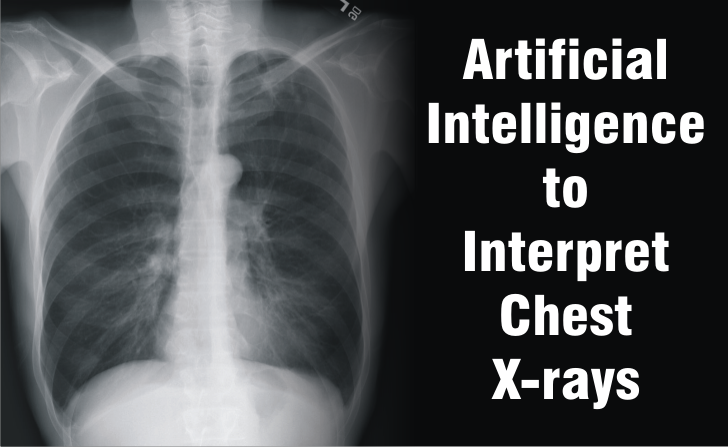
qXR, an Artificial Intelligence (AI) tool to interpret chest X-rays, which identifies 15 of the most common chest X-ray abnormalities, including Tuberculosis, with more than 90% accuracy, has been developed by the Mumbai-based Qure.ai, a health-care AI start-up. qXR uses a heat map or bounding box to point out abnormalities to the clinician. It was trained on over 1.5 million X-rays to detect 15 chest abnormalities, ranging from tuberculosis to potentially cancerous lung nodules. It takes only milliseconds to run and facilitates rapid confirmation. qXR is proving a valuable supplement to the existing healthcare systems even in settings without trained healthcare professionals.
Qure.ai, health-care AI start-up collaborated with radiologists at Columbia Asia health-care group of hospitals in Bengaluru to test the product and got a set 2000 chest X-rays from Columbia Asia’s digital database which qXR interpreted. Its findings were compared with the interpretations by three expert radiologists and interpretations by qXR were found to be more than 90% accurate.
Dr. Shalini Govil, Quality Controller for the Columbia Asia Radiology Group said, “The chest x-ray is the most commonly-performed radiology investigation, but one of the toughest to interpret.” “Qure.ai’s solution could serve as a radiology assistant, providing a draft report that can be validated by a physician or radiologist. They’ve also come up with technology to visualize what the algorithm sees – a way to ‘see through the computer’s eyes’. I think this will be a game-changer on the road to building confidence in AI.”
- qXR can explain in the way human radiologists do, why it interpreted the X-ray the way it did.
- Even the most sophisticated AIs frequently cannot do this — a problem known as AI’s “black box”.
- The “black box” is inherent in advanced AI techniques such as deep-learning.
- Deep-learning works to teach a computer to think like humans, researchers use a network of mathematical functions (called an artificial neural network) which mimics the biological brain. Next, they input data into this network.
- In qXR’s case, these were chest X-rays and radiologist interpretations of them. When the network is exposed to millions of such X-rays and interpretations, it builds its own rules for translating the images into interpretations.
- The resulting AI can now read new X-rays and spot abnormalities accurately.
Qure.ai’s qXR has recently received CE Certification and is the First AI-based Chest X-ray Interpretation Tool to get CE marking. CE certification for AI-based radiology products has been received only by five companies globally till now. CE marking is a certification mark (CE Certification) that indicates conformity with health, safety, and environmental protection standards for products sold within the European Economic Area (EEA). The CE marking is also found on products sold outside the EEA that are manufactured in, or designed to be sold in, the EEA.
Related Articles
-
 Oct 04, 2018 12:00 pm







Related Articles
-

Created at: May 29, 2019
-

Created at: May 28, 2019
-

Created at: May 27, 2019
-

Created at: May 27, 2019
-

Created at: May 26, 2019
-
Created at: May 26, 2019
-

Created at: May 25, 2019