
Social Media
Disaster Risk Mitigation Initiatives to Make India Resilient by 2030
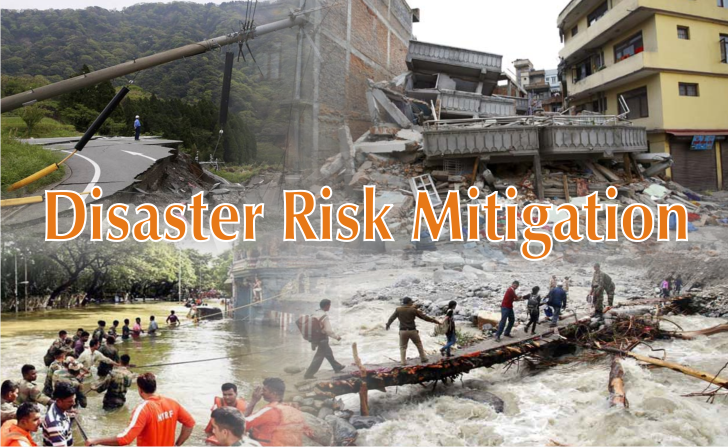
“Disaster Risk Reduction for Sustainable Development: Making India resilient by 2030”, was the theme of second meeting of National Platform on Disaster Risk Reduction(NPDRR), that was inaugurated by its Head, Union Home Minister Rajnath Singh, on 15 May, 2017. NPDRR is a multi-stakeholders National Platform for sharing the experiences in disaster management and for making a collective effort for disaster risk reduction; it also strengthens federal policy of the country.
Rajnath Singh also launched version 3.0 of National Database on Emergency Management (NDEM). This version of 3.0 is device independent and browser independent and equipped with latest resource mapping tools and audio and video conference facilities.
Union Home Minister called India, one of the most disaster-prone nations with more than 50% population of the country living in areas that are vulnerable to natural calamities. India has learnt lessons from the 1999 super cyclone in Odisha where 10,000 people had lost their lives, the 2001 earthquake in Gujarat and the 2004 tsunami and brought a paradigm change in its approach towards disaster risk mitigation. Emphasizing the role of prevention and mitigation in reducing disaster losses he pointed out that 1 extra Rupee spent on disaster preparedness and mitigation could save 10 Rupees of disaster loss and highlighted that various initiatives have been taken by the Government in a planned manner for disaster risk mitigation that include:
- Adopting disaster management act in 2005
- Disaster management policy in 2009
- Asian ministerial conference on disaster risk reduction (AMCDRR) 2016
- Setting up of SAARC disaster management centre
- Launching of dedicated satellite for south Asian countries
- Raising national disaster response force at national and state levels
- Preparation of disaster management plan and policy
- Development of early warning systems
- Construction of cyclone shelters and saline embankments
- Capacity building of communities through continuous training and awareness programme.
He appealed to the stakeholders to prevent “preventable death” caused by disasters and also prepare an action plan for vulnerable communities of societies. As sustainable developments are closely related with better disaster management, he urged all stakeholders to make all development initiatives disaster resilient. He recollected global agreements like Sendai Framework, Sustainable Development Goal and Paris Agreement on Climate Change (COP21) for disaster risk reduction.
Kiren Rijiju, Union Minister of State for Home Affairs, informed that India being a disaster prone country could not afford to ignore preparing for disasters and stressed the need to continuously enhance preparedness and risk reduction measures. He added that India has been taking the lead role in the entire efforts of disaster risk mitigation, especially in South Asia. He referred to 10 point-agenda for disaster risk reduction given by our Prime Minister during AMCDRR 2016 and urged the participants to draw concrete plans to implement this agenda into reality. He requested the disaster managers to give proper consideration to geo-physical condition of the particular State/UTs, while making any action plan for disaster risk reduction.
The Prime Minister had listed the following 10-point agenda during his inaugural speech at the Asian Ministerial Conference on Disaster Risk Reduction (AMCDRR) 2016, which was held in New Delhi in November 2016. The all-inclusive agenda presents a holistic approach to disaster risk management and addresses a whole range of issues, from community preparedness to use of technology and international cooperation:
- All development sectors must imbibe the principles of disaster risk management.
- Work towards risk coverage for all-starting from poor households to SMEs to multi-national corporations to nation states.
- Encourage greater involvement and leadership of women in disaster risk management.
- Invest in risk mapping globally. For mapping risks related to hazards like earthquakes we have accepted standards and parameters.
- Leverage technology to enhance the efficiency of our disaster risk management efforts.
- Develop a network of universities to work on disaster issues.
- Utilise the opportunities provided by social media and mobile technologies.
- Build on local capacity and initiative.
- Opportunity to learn from a disaster must not be wasted. After every disaster there are papers on lessons that are rarely applied.
- Bring about greater cohesion in international response to disasters.
Over 1000 distinguished guests including State Ministers, Parliamentarians, Heads of Local Self Government, Heads of specialized disaster management agencies, academicians, representatives from private sector organizations, media and civil society organizations besides Union Minister for Science & Technology and Earth Sciences, Dr. Harsh Vardhan and Additional Principal Secretary to Prime Minister Dr. P. K. Mishra, participated in the second meeting of National Platform on Disaster Risk Reduction.
Related Articles
-
 May 05, 2017 12:38 pm






Related Articles
-
Created at: Jan 22, 2020
-

Created at: Nov 2, 2019
-

Created at: May 28, 2019
-

Created at: May 28, 2019
-

Created at: May 27, 2019
-

Created at: May 27, 2019
-

Created at: May 26, 2019