
Social Media
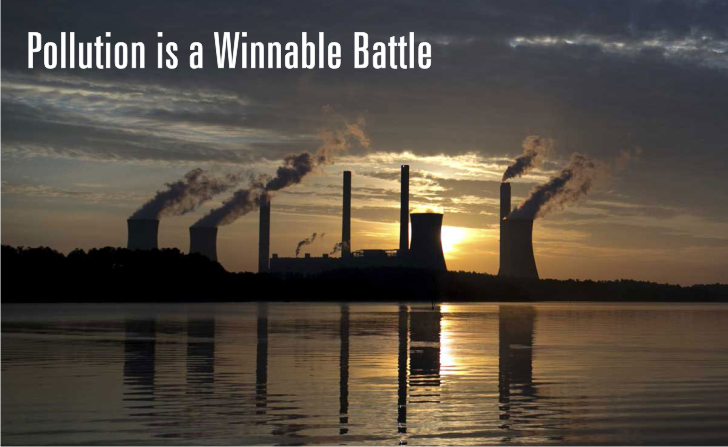
Pollution is a Winnable Battle
Lancet Commission on Pollution and Health released a report on 19 October 2017 on the first ever global analysis of impacts from all forms of pollution that include air, water, soil, and occupational pollutions; exploring economic costs and social injustice that aims to elevate pollution issue squarely into the international development agenda, ready for solutions. Input was provided under the umbrella of the Global Alliance on Health & Pollution by major global actors, including World Bank, UNEP, UNDP, European Union, and dozens of bilateral and international organizations. According to the analysis economic costs of pollution are enormous. The biggest increases in pollution related deaths have been recorded in India and Bangladesh and India tops the world in pollution-related deaths accounting for 2.5 million followed by China with 1.8 million deaths, of the total 9 million world-wide in 2015. The authors of the report aim to end neglect of the issue across the political spectrum, and mobilize the will, resources, and the leadership needed to confront it.
Key findings of the Lancet Commission report are:
- Pollution is no longer an isolated environmental issue. It affects health and well-being and has immense economic and social implications.
- Pollution is linked to an estimated nine million deaths each year worldwide, equivalent to one in six or 16% of all deaths – three times more deaths than AIDS, tuberculosis, and malaria combined; and fifteen times more than all wars and other forms of violence. It kills more people than smoking, hunger and natural disasters. In some countries, it accounts for one in four deaths.
- Pollution causes most of these deaths due to non-communicable diseases such as heart disease, stroke, lung cancer and chronic obstructive pulmonary disease (COPD).
- Air pollution, including ambient air pollution which is outdoor air pollution comprised of gases and particulate matter; and household air pollution that results from the burning of wood, charcoal, coal, dung, or crop wastes indoors and ambient ozone, is the biggest contributor, linked to 6.5 million deaths in 2015.
- Water pollution, such as unsafe sanitation and polluted water sources, is linked to 1.8 million deaths as a result of gastrointestinal diseases and parasitic infections.
- Workplace pollution including exposure to toxins and carcinogens is linked to 0.8 million deaths from diseases such as such pneumoconiosis in coal workers, bladder cancer in dye workers, and asbestosis, lung cancer, mesothelioma, and other cancers in workers exposed to asbestos.
- Finally, lead pollution is linked to 0.5 million deaths that result from high blood pressure, renal failure, and cardiovascular disease caused by lead in adults.
- Almost 92% pollution-related deaths occur in low and middle income countries, and in rapidly industrializing countries, such as India, Pakistan, China, Bangladesh, Madagascar and Kenya.
- Children face the highest risks because small exposures to chemicals in utero and in early childhood can result in lifelong disease and, disability, premature death, as well as reduced learning and earning potential.
- As countries develop and industrialize, the type of pollution and the related health problems they face, change. For example, water pollution and household air pollution are more common in early stages of industrial development, causing higher rates of pneumonia and diarrheal diseases in low- and middle-income countries.
- Deaths associated with water and household air pollution, have reduced from 5.9 million deaths in 1990 to 4.2 million in 2015.
- However, types of pollution associated with industrial development, such as ambient air pollution (including ozone), chemical, occupational pollution and soil pollution, have increased from 4.3 million (9.2%) in 1990 to 5.5 million (10.2%) in 2015 as countries reach higher levels of development.
- The Report reveals pollution’s severe and underreported contribution to the Global Burden of Disease and uncovers the economic costs of pollution to low- and middle-income countries, and compares the costs of inaction to the costs of available solutions.
- Report throws light on the burden that pollution places on health and economic development, and suggests cost-effective pollution control solutions and strategies.
- Report stresses that human activities including industrialization, urbanization, and globalization, are all drivers of pollution.
Welfare losses due to deaths and disease from pollution equate to US$4.6 trillion each year, which is equivalent to 6.2% of global economic output. Proportionately, low-income countries pay 8.3% of their gross national income to pollution-related death and disease, while high-income countries pay 4.5%. In the United States, each dollar invested in air pollution control has returned an estimated $30 (USD) in benefits (range, $4 – $88) since 1970. Higher IQs and increased productivity from removing lead from gasoline has returned an estimated $200 billion (range, $110-$300 billion) each year since 1980 ($6 trillion total). The claim that pollution control stifles economic growth and that poor countries must pollute to grow is false.
Transition toward a circular economy will reduce pollution-related disease and improve health. Decoupling development from the consumption of non-renewable resources will minimize the generation of pollution and other forms of waste by recycling and reuse.
The report is a clear signal to governments to put pollution prevention high on the national priority and tackling pollution must be integrated into the planning process. Robust implementation of laws and regulations, and engagement with the private sector, supporting city-level initiatives, should be at the core of the effort to tackle pollution. Reducing pollution, improving people’s well-being and ensuring economic growth requires coordinated effort by all.
Despite all the above impacts of pollution, the report analyses that pollution is not the inevitable consequence of economic development, and applying similar legislation and regulation from high-income countries to low- and middle-income countries could help to improve and protect health as countries develop and is optimistic with the view that the pollution is a winnable battle.
Related Articles
-
 Jan 20, 2017 10:50 am







Related Articles
-
Created at: Jan 22, 2020
-

Created at: Nov 2, 2019
-

Created at: May 29, 2019
-

Created at: May 28, 2019
-

Created at: May 28, 2019
-

Created at: May 27, 2019
-

Created at: May 27, 2019