
Social Media
Suu Kyi Assures Asean Summit Rohingya Crisis Being Addressed
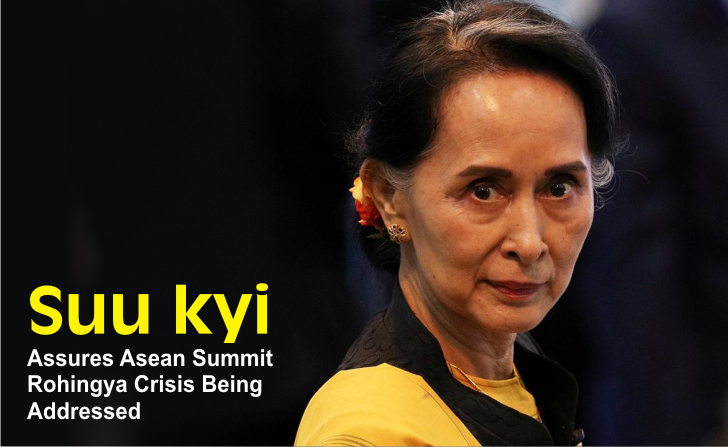
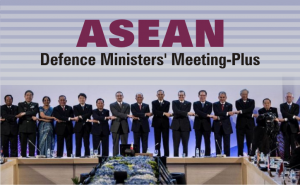
On the on-going Rohingya crisis, Ms Suu Kyi, the de-facto head of Myanmar’s civilian administration, who is accused of ignoring the plight of 600,000 Rohingya, that have been forced to flee the country to Bangladesh, gave an assurance in the recently held 31st ASEAN Summit at Manila in Philippines on 13 & 14 November 2017 that the crisis was being addressed. International pressure has been mounting for months on Aung Sang Suu Kyi to condemn the army’s alleged brutality and what the UN described as “textbook example of ethnic cleansing”.
Rohingya crisis became grave with their exodus picking up pace since 25 August 2017 when an attack on police posts by Arakan Rohingya Salvation Army (ARSA), an extremist Rohingya group, invited sustained reprisal from the army and local Buddhist mobs. ARSA, a group previously known as Harakah al-Yaqin, is an armed guerrilla outfit, which is active since 2016 and has been targeting Myanmar armed forces, claiming to fight for a democratic Muslim state for the Rohingya. Myanmar military launched clearance operations to root out ARSA, which have once again affected the lives of Rohingya, many of whom have been living in relief camps since 2012. In the counter attacks launched by Army 430 Militants, 30 Civilians and 13 security personnel and two government officials were killed, according to Myanmar authorities.
Rohingyas have been the ultimate nowhere people since 1982, when a Burmese law rendered them stateless, with the government arguing that they are Bengali. Rohingyas, described as “the world’s most persecuted minority” by the United Nations in 2013, are the natives of the Arakan Hill Tracts – now the Rakhine state of Myanmar. They are the most vulnerable people among the forcibly displaced groups, who have been rejected by the country they were born in and shunned by the neighbouring states. They are an ethnic minority group largely comprising Muslims who have lived for centuries in the majority Buddhist Myanmar. Currently, there are about 1.1 million Rohingya Muslims who live in the Southeast Asian country, Myanmar:
- Rohingya speak Rohingya or Ruaingga, a dialect of Bengali, as opposed to the commonly spoken Burmese language.
- Rohingya’s habitat is mostly in western Myanmar (earlier known as Burma), bordering the Bay of Bengal with a northern extremity abutting Bangladesh.
- Though Rohingya have been living in this Southeast Asian country for generations, Myanmar considers them as persons who migrated to their land during the Colonial rule.
- Rohingya are not considered one of the country’s 135 official ethnic groups and have been denied citizenship in Myanmar since 1982, which has effectively rendered them stateless.
- Under the 1982 Burmese Citizenship Law a Rohingya is eligible for citizenship only if he/she provides proof that his/her ancestors have lived in the country prior to 1823. Else, they are classified as “resident foreigners” or as “associate citizens” (even if one of the parents is a Myanmar citizen).
- Buddhist majority Myanmar see Rohinga as illegal Bangladeshi immigrants.
- Rohingya’s movements are also restricted within the Rakhine state and they are not entitled to be part of civil service.
- Rakhine is one the poorest states in the country with ghetto-like camps and a lack of basic services and opportunities.
- The Rohingyas have faced military crackdowns in 1978, 1991–1992, 2012, 2015 and 2016-17. Army and sections of Buddhist zealots have been carrying out a systemic ethnic cleansing of Rohingyas since 2015.
- Due to ongoing violence and persecution, hundreds of thousands of Rohingya have fled to neighboring Southeast Asian countries either by land or boat over the course of many decades, many of them to Bangladesh.
- Around Rohingya 40000 may have crossed over to India.
- Recently Myanmar stopped UN aid from reaching Rohingya victims.
It is an irony that the period of Myanmar’s transition to democracy, that too on Nobel Peace Prize winner Aung San Suu Kyi’s watch has coincided with the most heartless alienation of the Rohingya. A UN report has called Rohingyas victims of “crimes against humanity”, while Archbishop Emeritus Desmond Tutu has referred to the violence as “ethnic cleansing”.
Related Articles
-
 May 11, 2018 12:00 pm



Related Articles
-
Created at: Jan 22, 2020
-

Created at: Nov 2, 2019
-

Created at: May 29, 2019
-
Created at: May 28, 2019
-

Created at: May 28, 2019
-

Created at: May 27, 2019
-
Created at: May 27, 2019